
Tendons & tendon sheaths
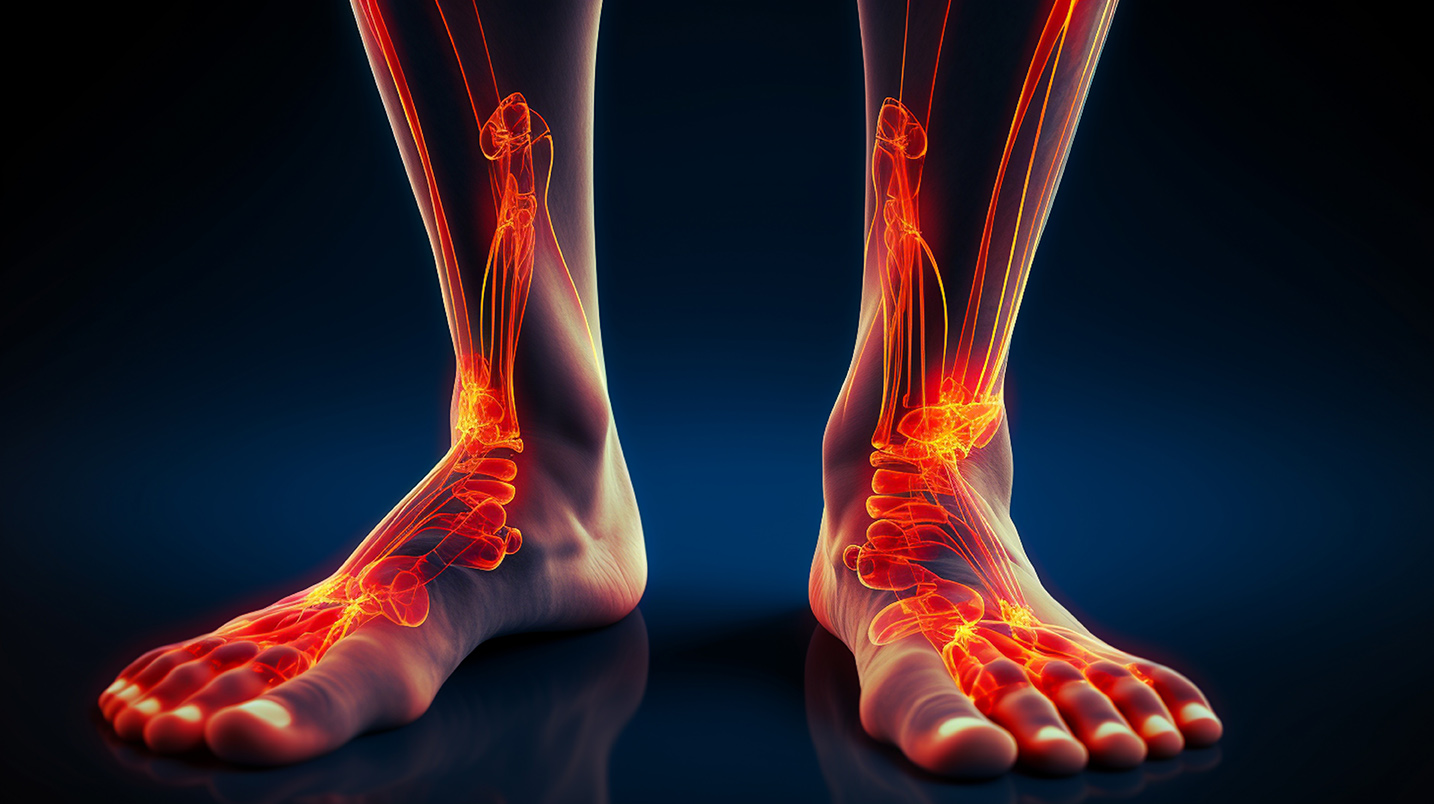
Assessment for tendinopathy, tenosynovitis, partial tears, full-thickness tears and fluid around accessible tendons.
Musculoskeletal ultrasound • one foot
A focused, dynamic ultrasound examination for foot pain, sports injury, tendon and ligament problems, plantar fascia symptoms, Morton’s neuroma and superficial soft-tissue concerns.

About the examination
Musculoskeletal ultrasound uses high-frequency sound waves to assess superficial soft tissues in and around the foot. It is particularly useful for structures that can be examined dynamically, including tendons, ligaments, plantar fascia, bursae and superficial joints.
The examination is tailored to your symptoms rather than being a screening test for every possible cause of foot pain. The practitioner will focus on the painful or injured area and may compare it with the opposite side where useful.
What we can assess
The exact protocol is adapted to the location of pain, injury mechanism and clinical question.
Assessment for tendinopathy, tenosynovitis, partial tears, full-thickness tears and fluid around accessible tendons.
Focused review of accessible ligamentous structures where there is localised pain, instability or previous trauma.
Assessment of the plantar fascia for thickening, altered echotexture, inflammation or focal tearing.
Evaluation of the intermetatarsal spaces for a suspected neuroma, intermetatarsal bursitis or another focal forefoot abnormality.
Assessment for joint effusion, synovial thickening, bursitis and selected sonographic features of inflammatory or crystal arthropathy.
Characterisation of superficial lumps such as ganglion cysts and other visible soft-tissue abnormalities.
When it may help
Before your appointment
You can eat, drink and take your usual medication unless another clinician has given you different instructions.
Choose shoes and socks that are easy to remove. The foot and sometimes the lower ankle need to be accessible.
Be ready to point to the most symptomatic area and explain what movements or activities reproduce your symptoms.
Bring any relevant X-ray, MRI, ultrasound, orthopaedic, podiatry or physiotherapy reports where available.
Your appointment
The practitioner confirms the exact location of pain or swelling, how symptoms started, previous injury and the movements that aggravate the problem.
Gel and a high-frequency probe are applied over the symptomatic part of the foot. Relevant tendons, ligaments, plantar fascia, joints and superficial tissues are assessed.
You may be asked to move the foot or toes, resist gentle pressure or change position so that tendons and other structures can be evaluated in real time.
The main observations are explained and a written report is provided. Depending on the findings, physiotherapy, podiatry, GP, orthopaedic review or further imaging may be recommended.
Choosing the right examination
Different symptom patterns are better assessed with different investigations.
Best suited to: superficial tendon, ligament, plantar fascia, Morton’s neuroma, bursitis, joint-fluid and soft-tissue lump assessment.
Best suited to: symptoms centred around the ankle joint, Achilles tendon, ankle ligaments or structures above the foot.
Best suited to: suspected fracture, significant trauma, deformity or assessment of bony alignment and some arthritic changes.
Best suited to: deeper soft tissues, bone marrow stress injury, cartilage, complex joint pathology or persistent symptoms not explained by ultrasound.
Best suited to: a cold or discoloured foot, poor pulses, vascular symptoms or suspected venous/arterial disease rather than a focal MSK problem.
Best suited to: biomechanical problems, persistent weight-bearing pain, complex deformity or symptoms requiring treatment planning beyond imaging alone.
PrivateSono
Book a self-referral appointment in Central London or St Albans for targeted musculoskeletal ultrasound of one foot.
View booking optionsScans performed by appropriately trained ultrasound professionals.
Real-time evaluation during movement where clinically useful.
Relevant findings, limitations and recommendations documented.
No GP referral is required to book the examination.
Clinic locations
Book online
Select your preferred clinic, date and appointment time below. This booking group is configured for the PrivateSono foot ultrasound service.
Secure online booking
Choose a time that suits you — we search every eligible specialist and confirm your appointment instantly.
Choosing a specialist re-draws the calendar to show only their available dates.
All fields are required unless marked optional.
Use the secure Stripe tabs below to select Card, Google Pay, Apple Pay or Klarna when available.
Payment methods shown depend on your device and the options enabled in Semble Pay. Card details are handled securely by Stripe and are not stored by this website.
If the booking shortcode appears as plain text in Elementor, place Secure online booking Choose a time that suits you — we search every eligible specialist and confirm your appointment instantly. Choosing a specialist re-draws the calendar to show only their available dates. All fields are required unless marked optional. Use the secure Stripe tabs below to select Card, Google Pay, Apple Pay or Klarna when available. Payment methods shown depend on your device and the options enabled in Semble Pay. Card details are handled securely by Stripe and are not stored by this website.Book your scan
1,200+ patient reviews
Regulated by the Care Quality Commission (CQC)
Payments secured by Stripe
Loading…
Loading booking options…
Available times
Your appointment
Your details
Appointment available
Secure payment
Choose your payment method
Booking confirmed
Scan
Branch
Date and time
Specialist
Reference
Invoice
Payment
Good to know
Common questions about what the scan can assess, preparation and limitations.
Still unsure? Call 020 7101 3377A focused musculoskeletal foot ultrasound can assess accessible tendons, ligaments, plantar fascia, joints, bursae and superficial soft tissues. The examination is tailored to the symptomatic area rather than being a screening test for the whole foot.
Ultrasound can assess the plantar fascia for thickening, altered echotexture, tears and surrounding inflammation where plantar fasciitis or plantar-fascial injury is suspected.
Yes. Ultrasound can assess the intermetatarsal spaces for a suspected Morton’s neuroma and may help distinguish it from intermetatarsal bursitis or another soft-tissue cause of forefoot pain.
Ultrasound is useful for many superficial tendon and ligament abnormalities, including tendinopathy, tenosynovitis and partial or full-thickness tears. The structures examined depend on where your symptoms are located.
Ultrasound may occasionally show indirect signs of a superficial stress injury, but it cannot reliably exclude a fracture. X-ray, MRI or CT may be more appropriate depending on your symptoms and clinical history.
The booked examination is focused on one foot. Adjacent ankle structures may be reviewed if they are directly relevant, but symptoms centred on the ankle may require a dedicated ankle ultrasound.
Yes. Ultrasound can often characterise superficial cystic and solid lesions and assess their relationship to a nearby tendon, joint or other soft-tissue structure. Some findings may need MRI, biopsy or specialist review.
Ultrasound can show joint effusion, synovial thickening and selected features associated with inflammatory or crystal arthropathy. A definitive diagnosis may also require clinical assessment, blood tests or other imaging.
No. PrivateSono accepts self-referrals. Please provide the exact site of pain, how long it has been present, how it started and details of any previous injury, treatment or imaging.
No fasting or bladder preparation is required. Wear shoes and socks that are easy to remove and bring any relevant previous X-ray, MRI or ultrasound reports if available.
A focused foot ultrasound commonly takes around 20 to 30 minutes, although the appointment may be longer if the symptoms are complex or multiple structures need detailed assessment.
Diagnostic ultrasound is non-invasive and does not use ionising radiation. Probe pressure and movement testing may briefly reproduce discomfort over a tender area, but the practitioner will work within your tolerance.
A normal ultrasound does not exclude every cause of foot pain. Persistent symptoms may require X-ray, MRI, CT, podiatry, physiotherapy, orthopaedic review or another targeted investigation.
Seek urgent assessment after significant trauma if you cannot bear weight, the foot is obviously deformed, cold, blue or numb, or if you develop rapidly spreading redness, fever, an open wound or rapidly worsening swelling and pain.
The one-limb PrivateSono foot ultrasound is listed at £199. Use the booking section above to check current appointment availability.
Private foot ultrasound
Select your clinic and appointment time through the booking section.