
Arterial circulation
Assesses major lower-limb arteries for blood-flow patterns, plaque, narrowing and evidence of reduced circulation.
Combined arterial + venous Doppler
A comprehensive one-visit assessment of both the arteries and veins of one leg, designed to investigate vascular causes of pain, cramping, swelling, heaviness, coldness, colour change or circulation concerns.
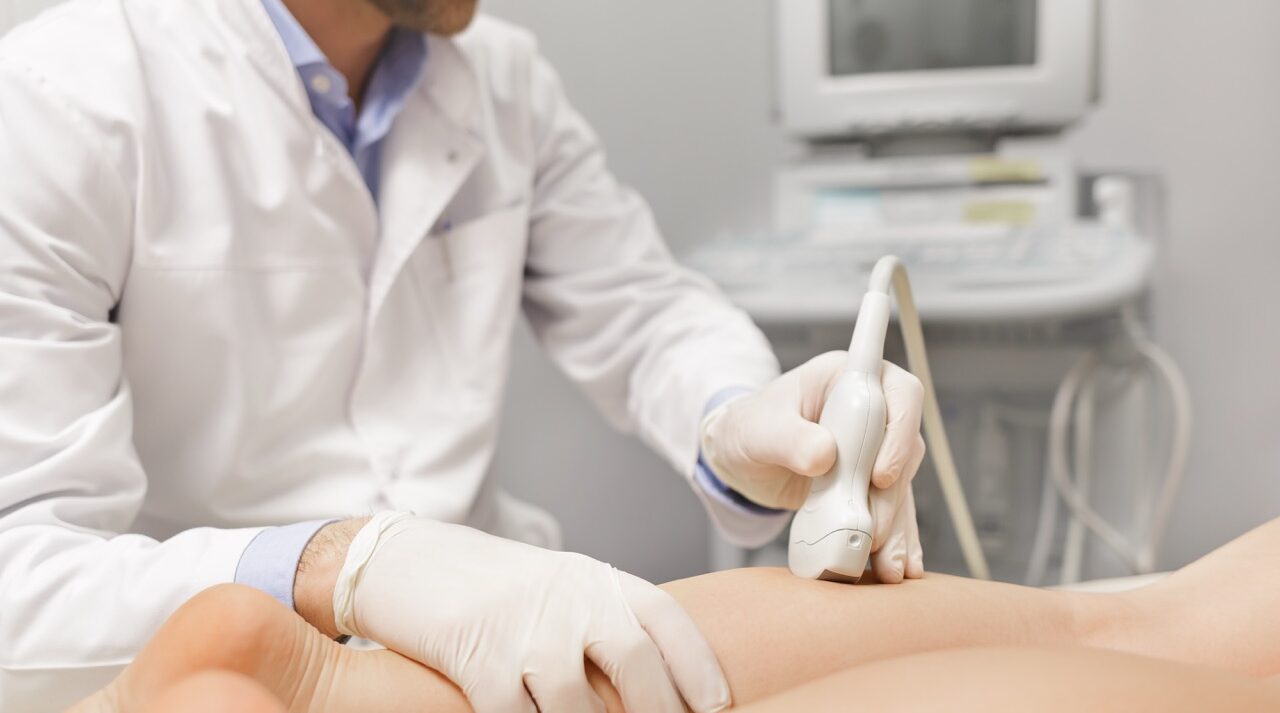
The package combines arterial Doppler ultrasound and venous duplex ultrasound of one leg in the same visit. The arterial component assesses blood supply and looks for reduced flow, narrowing or blockage patterns. The venous component evaluates venous drainage, vein patency and reflux, and can include DVT assessment where clinically relevant. It is useful when symptoms could be arterial, venous or mixed.
One visit, two vascular systems
Leg pain is not caused by a single vascular condition. Similar symptoms can arise from reduced arterial supply, venous insufficiency, thrombosis or a combination of problems.
Assesses major lower-limb arteries for blood-flow patterns, plaque, narrowing and evidence of reduced circulation.
Examines deep and superficial venous flow, patency and valve function where clinically appropriate.
Compression and Doppler techniques can assess for deep-vein thrombosis when symptoms or clinical history make this relevant.
Looks for abnormal reverse flow that can contribute to aching, heaviness, swelling and varicose-vein symptoms.
Arterial Doppler can demonstrate patterns associated with stenosis, obstruction or reduced blood supply to the leg.
A one-limb package provides focused investigation when symptoms predominantly affect the same leg.
When to consider it
This combined package is particularly useful when the pattern of symptoms does not clearly distinguish between arterial and venous disease.
Calf, thigh or buttock cramping brought on by walking and relieved by rest can occur with reduced arterial circulation.
Persistent or recurrent one-sided swelling may relate to venous obstruction, reflux or other vascular conditions.
Symptoms that worsen after prolonged standing can occur with venous insufficiency.
Persistent coolness, colour change or weak pulses can suggest reduced arterial supply and requires appropriate assessment.
Visible veins, itching, skin changes or ankle swelling may be associated with superficial venous reflux.
New unilateral tenderness or swelling may require urgent assessment for DVT.
Delayed wound healing may be associated with reduced arterial supply, venous disease or both.
Diabetes, smoking, hypertension, high cholesterol and previous vascular disease can increase the relevance of circulation assessment.
Clinical coverage
The exact protocol is tailored to the symptoms and clinical history, while covering the major arterial and venous pathways relevant to lower-limb circulation.
Major arteries at the groin and thigh are assessed for patency, flow and evidence of stenosis.
The artery behind the knee is assessed for flow quality and focal vascular abnormalities.
Tibial and other distal arterial flow is assessed where technically accessible and clinically appropriate.
Vein compressibility, lumen and Doppler flow are assessed at the groin.
Deep veins through the thigh and behind the knee are assessed for patency and thrombus.
Relevant calf veins are examined where technically possible, especially when thrombotic symptoms are present.
The great and small saphenous systems and associated superficial veins may be assessed for reflux where indicated.
Colour and spectral Doppler demonstrate flow direction and waveform characteristics throughout the examination.
Arterial and venous findings are considered together to provide a clearer vascular explanation for the symptoms.
Before your appointment
No fasting, full bladder or special dietary preparation is normally required.
The symptomatic leg may need to be exposed from the groin to the ankle for a complete vascular assessment.
Previous vascular ultrasound, CT angiography, MRI or specialist letters can be useful for comparison.
Tell the practitioner about anticoagulants, antiplatelet medication and treatments for blood pressure, cholesterol or diabetes.
Be ready to explain whether pain occurs with walking or rest, when swelling is worst and whether symptoms are sudden or chronic.
Your appointment
The arterial and venous systems are evaluated sequentially during the same visit.
Your practitioner reviews the location and pattern of pain, swelling, walking symptoms, vascular risk factors, previous DVT and relevant treatment.
Greyscale, colour and spectral Doppler ultrasound are used to assess the major arteries for patency, waveform changes and evidence of narrowing or reduced flow.
Deep and superficial veins are assessed using compression and Doppler techniques for patency, thrombosis and reflux where clinically appropriate.
The main findings are generally explained after the examination, followed by a formal report with relevant recommendations for GP, vascular or other specialist follow-up.
Urgent symptoms
Some arterial and venous conditions can become emergencies. Severe or rapidly changing symptoms require urgent clinical assessment.
Sudden severe limb pain, new numbness or weakness, marked pallor/coldness or loss of circulation may indicate acute limb ischaemia and requires emergency medical assessment.
Call 999 for sudden breathlessness, chest pain, coughing blood, collapse or severe dizziness because these symptoms can occur with pulmonary embolism.
New one-sided swelling, pain, warmth or redness can be caused by DVT and should be assessed promptly through an appropriate urgent pathway.
Ulcers, blackened skin or rapidly worsening foot wounds require prompt clinical evaluation, particularly in people with diabetes or known vascular disease.
Why PrivateSono
Instead of selecting an arterial or venous scan before the cause is clear, this package assesses both systems in the symptomatic leg and provides a coordinated vascular report.
Book one-limb package — £449Arterial supply and venous drainage are evaluated in the same appointment.
No GP referral is normally required to book the scan.
Designed for symptoms that predominantly affect one leg.
Real-time colour and spectral Doppler assessment with no ionising radiation.
A formal diagnostic report supports onward GP or specialist care when needed.
Appointments are available in Central London and St Albans.
Clinic locations
Choose your preferred clinic and an available appointment in the booking section below.
Central London
London, W1G 8EN — close to the Harley Street and Marylebone medical district.
Book Central LondonSt Albans
St Albans, Hertfordshire, AL1 3HZ — conveniently located near the city centre and station.
Book St AlbansPatient questions
Answers about what is included, symptoms, DVT, arterial disease, venous insufficiency, preparation and limitations.
Need help choosing a scan? Call 020 7101 3377It is a combined vascular ultrasound assessment of one leg that examines both the arterial blood supply and venous drainage in a single appointment. It is designed to investigate vascular causes of leg pain, cramping, swelling, heaviness and circulation concerns.
The package combines arterial Doppler and venous duplex ultrasound of the symptomatic leg. The arterial examination assesses blood-flow patterns and possible narrowing or blockage. The venous examination assesses vein patency, flow and reflux, with DVT assessment performed when clinically relevant.
PrivateSono currently lists the Comprehensive Vascular Package for Leg Pain – One Limb at £449. Check the live booking widget for current availability and the final fee before confirming.
It can be useful for unexplained leg pain, cramping when walking, swelling, aching, heaviness, cold feet, colour change, visible varicose veins and mixed symptoms where it is not clear whether arterial or venous circulation is contributing.
The arterial Doppler component assesses the major leg arteries for reduced flow, abnormal waveforms, narrowing and blockage patterns that may be associated with peripheral arterial disease. Further tests or specialist review may be recommended depending on the findings.
Yes. The venous component can assess deep and superficial venous flow and valve function, including reflux where appropriate, helping investigate chronic venous insufficiency and varicose-vein related symptoms.
The venous examination can assess for deep vein thrombosis where clinically indicated. However, suspected acute DVT should be treated as an urgent medical problem. Chest pain, sudden breathlessness, coughing blood or collapse requires emergency assessment rather than a routine outpatient scan.
No fasting or full bladder is normally required. Wear loose clothing that allows the entire leg to be accessed from the groin to the ankle. Bring relevant previous vascular reports and a current medication list if available.
A combined arterial and venous assessment commonly takes around 45 to 60 minutes for one limb, although the exact duration depends on anatomy, mobility, symptoms and the extent of vascular assessment required.
No. This package investigates vascular causes. Musculoskeletal, neurological, spinal, joint and other non-vascular causes of leg pain may require a different ultrasound, X-ray, MRI, blood test or specialist assessment.
Book online
The current PrivateSono price for the one-limb package is £449. Select your preferred clinic and available appointment below.
Secure online booking
Choose a time that suits you — we search every eligible specialist and confirm your appointment instantly.
Choosing a specialist re-draws the calendar to show only their available dates.
All fields are required unless marked optional.
Use the secure Stripe tabs below to select Card, Google Pay, Apple Pay or Klarna when available.
Payment methods shown depend on your device and the options enabled in Semble Pay. Card details are handled securely by Stripe and are not stored by this website.
Comprehensive vascular ultrasound
One limb • £449 • Central London & St Albans • No GP referral normally required