
ABPI pressure index
Compares ankle systolic pressure with arm pressure to support assessment of lower-limb arterial circulation.
Leg circulation assessment • Doppler + ABPI
A combined one-leg circulation assessment using arterial duplex ultrasound and Ankle Brachial Pressure Index measurements to investigate leg pain on walking, cold feet, weak pulses, slow-healing wounds and suspected peripheral arterial disease.
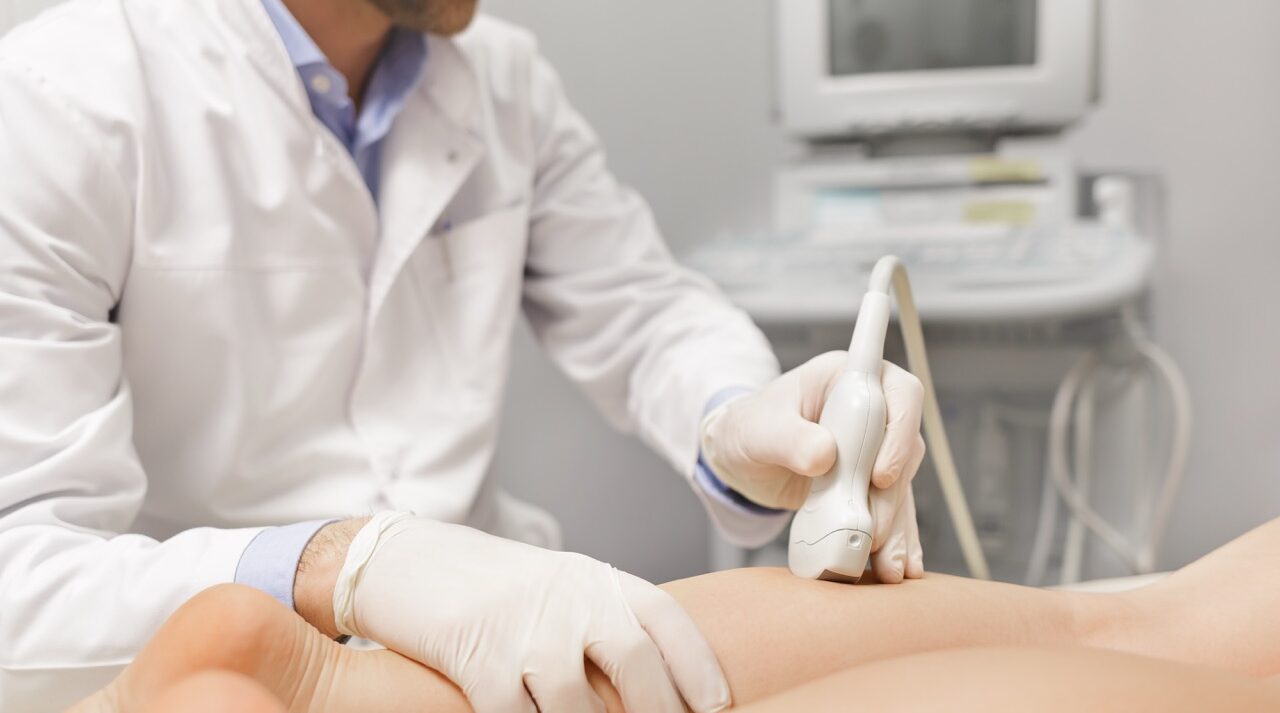
This combined test assesses how blood reaches one leg and foot. Arterial Doppler ultrasound visualises the major arteries and analyses blood-flow waveforms, while ABPI compares systolic blood pressure measured at the ankle with the highest arm pressure. NICE recommends ABPI as part of the clinical assessment of suspected peripheral arterial disease, alongside symptoms, examination and pulse assessment.
Two complementary assessments
Each test answers a different clinical question. Together they provide pressure information plus detailed real-time arterial imaging.
Compares ankle systolic pressure with arm pressure to support assessment of lower-limb arterial circulation.
Ultrasound demonstrates the visible arterial lumen, wall, plaque and areas of suspected narrowing or occlusion.
Spectral Doppler shows flow direction, waveform shape and haemodynamic changes along the leg arteries.
Velocity measurements can help identify segments where stenosis or altered blood flow is suspected.
The combined findings support evaluation for peripheral arterial disease in the context of symptoms and risk factors.
The report can support GP, vascular specialist or further-imaging decisions when circulation is abnormal.
Who may benefit
Peripheral arterial disease may cause exertional symptoms, foot circulation problems or slow healing, but it can also be present before symptoms become obvious.
Calf, thigh or buttock cramping that appears with activity and improves after resting may represent intermittent claudication.
Persistent coolness or a noticeable temperature difference between feet may justify circulation assessment.
A clinician may request Doppler and ABPI when foot or leg pulses are difficult to feel.
Pallor, dusky discolouration or other persistent changes can occur when arterial supply is impaired.
Foot or lower-leg wounds that heal poorly may require arterial assessment before treatment decisions are made.
Diabetes increases PAD risk, but normal or high ABPI values alone do not safely exclude PAD in people with diabetes.
Current and previous smoking are important risk factors for atherosclerosis and peripheral arterial disease.
Cardiovascular risk factors can increase the likelihood of lower-limb arterial disease.
What we assess
The precise protocol depends on symptoms and anatomy, with major arteries assessed from the groin towards the foot where technically possible.
Assesses inflow at the groin and provides an important proximal waveform for the symptomatic leg.
Reviews the major thigh arteries for plaque, stenosis, occlusion and altered Doppler flow.
Assesses arterial flow behind the knee and identifies relevant focal disease where visible.
Assesses distal flow towards the dorsalis pedis circulation when technically accessible.
Evaluates distal arterial flow and supports the ankle-pressure component of the examination.
Assessed where visible and clinically appropriate as part of the calf arterial circulation.
Pedal circulation may be assessed as part of distal arterial and ABPI evaluation.
Systolic pressure is measured at appropriate ankle arteries using a cuff and Doppler signal.
Brachial systolic pressure is measured so the ankle-to-arm pressure index can be calculated.
Before your appointment
No fasting, full bladder or special dietary preparation is normally required.
The selected leg needs to be accessible from the groin to the foot, and both upper arms may need to be exposed for blood-pressure measurements.
Bring prior ABPI values, arterial Doppler reports, CT/MR angiography or vascular clinic letters if available.
Tell the practitioner about antiplatelets, anticoagulants, blood-pressure medication, statins and diabetes treatment.
Be ready to explain where pain occurs, how far you can walk before it starts and how quickly it resolves after resting.
Your appointment
The appointment combines pressure measurements with a detailed ultrasound assessment of one leg.
Your practitioner reviews leg symptoms, walking tolerance, foot problems, previous vascular history and cardiovascular risk factors.
Blood-pressure cuffs are used at the arms and ankle, together with a Doppler probe, to record systolic pressures and calculate the pressure index.
Greyscale, colour and spectral Doppler ultrasound assess the major leg arteries for plaque, stenosis, occlusion and altered flow patterns.
The main findings are explained after the assessment, with a written report and recommendations for GP, vascular or further-imaging review where indicated.
Urgent symptoms
Sudden loss of arterial blood supply can threaten the limb and needs emergency medical assessment.
Seek emergency assessment for abrupt severe pain, especially when the foot becomes cold, pale, blue or markedly different from the other side.
Sudden loss of sensation or movement in a painful, cold limb may indicate acute limb ischaemia and requires immediate medical attention.
Gangrene, spreading tissue damage or a rapidly deteriorating foot wound requires prompt specialist or emergency assessment.
A mainly arterial Doppler + ABPI scan is not a substitute for a DVT scan. New unexplained one-sided swelling, warmth or tenderness may require urgent venous duplex assessment.
Why PrivateSono
This combined service brings together anatomical arterial imaging, real-time Doppler waveforms and ABPI pressure measurement to provide a clearer assessment of one-sided circulation symptoms.
Book one limb — £299Arterial duplex ultrasound and ABPI pressure testing in one visit.
Focused assessment for clearly one-sided circulation symptoms.
Self-referral is normally available.
Real-time colour and spectral Doppler assessment with no ionising radiation.
Formal findings can support onward GP or vascular specialist review.
Appointments in Central London and St Albans.
Clinic locations
Choose your preferred clinic and an available appointment using the booking section below.
Central London
London, W1G 8EN — close to Harley Street, Marylebone, Mayfair and Fitzrovia.
Book Central LondonSt Albans
St Albans, Hertfordshire, AL1 3HZ — convenient for Hertfordshire and surrounding areas.
Book St AlbansPatient questions
Answers about PAD, ABPI, arterial ultrasound, preparation, diabetes, pricing and scan limitations.
Need help choosing a vascular scan? Call 020 7101 3377It is a combined circulation assessment of one leg. Arterial Doppler ultrasound evaluates the major leg arteries, blood-flow direction and waveform patterns, while the Ankle Brachial Pressure Index compares systolic pressure at the ankle with pressure in the arm to support assessment for peripheral arterial disease.
ABPI stands for Ankle Brachial Pressure Index. It is calculated from ankle and arm systolic blood-pressure measurements and is interpreted together with symptoms, pulse examination and Doppler findings.
ABPI provides a pressure-based measure of lower-limb circulation, while Doppler ultrasound shows the anatomy and blood-flow pattern within individual arteries. Combining both can provide a more complete assessment than either test alone when peripheral arterial disease is suspected.
The examination may be useful for calf, thigh or buttock pain when walking, cold feet, reduced pulses, colour change, numbness, slow-healing wounds, suspected poor circulation or known peripheral arterial disease requiring follow-up.
The one-limb arterial Doppler examination commonly assesses the femoral, popliteal, tibial and pedal arterial circulation where technically accessible and clinically appropriate, using greyscale, colour and spectral Doppler.
No. ABPI must be interpreted in clinical context. NICE specifically advises that peripheral arterial disease should not be excluded in people with diabetes on the basis of a normal or raised ABPI alone, because arterial calcification can make ankle pressures misleadingly high.
No GP referral is normally required for PrivateSono self-referral. Bring details of symptoms, cardiovascular risk factors, medication and any previous vascular imaging or ABPI results where available.
No fasting or full bladder is normally required. Wear loose clothing that allows access to the groin, thigh, calf, ankle and upper arms. Avoid restrictive garments around the limb and bring previous vascular reports if available.
A one-limb Peripheral Arterial Doppler Ultrasound + ABPI assessment commonly takes around 30 to 40 minutes, although examination time varies with anatomy, mobility and the complexity of the findings.
PrivateSono currently lists the Peripheral Arterial Doppler Ultrasound + ABPI assessment for one limb at £299. Use the booking widget to view current appointment availability and confirm the final fee.
Book online
The current PrivateSono price for the one-limb combined assessment is £299. Select your preferred clinic and appointment below.
Secure online booking
Choose a time that suits you — we search every eligible specialist and confirm your appointment instantly.
Choosing a specialist re-draws the calendar to show only their available dates.
All fields are required unless marked optional.
Use the secure Stripe tabs below to select Card, Google Pay, Apple Pay or Klarna when available.
Payment methods shown depend on your device and the options enabled in Semble Pay. Card details are handled securely by Stripe and are not stored by this website.
Private arterial circulation assessment
One limb • £299 • Central London & St Albans • No GP referral normally required