
Urgent venous Doppler • DVT assessment
Private DVT Doppler ultrasound scan
A focused venous duplex ultrasound for suspected deep vein thrombosis, one-sided leg swelling, calf or thigh pain, warmth or tenderness — using vein compression and Doppler blood-flow assessment with urgent reporting and clear next-step advice.
- No GP referral required
- Central London & St Albans
- One or both limbs
What is a DVT Doppler ultrasound scan?
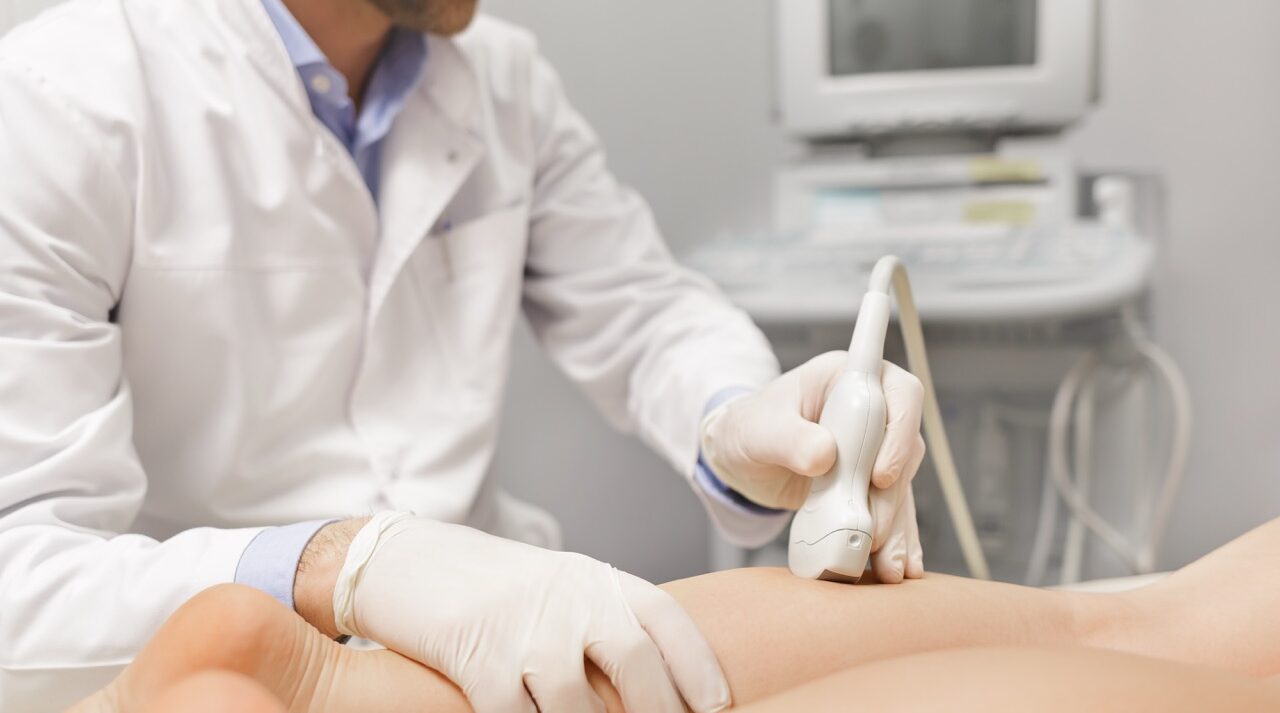
A DVT Doppler scan, also called venous duplex or compression ultrasound, examines the deep veins for signs of blood clot. The practitioner assesses whether veins compress normally and uses colour and spectral Doppler to evaluate venous blood flow. NICE recommends rapid proximal leg-vein ultrasound as part of the diagnostic pathway when DVT is clinically likely; ultrasound findings must therefore be interpreted alongside appropriate clinical assessment and, where indicated, D-dimer testing.
Scan coverage
What the DVT Doppler ultrasound assesses
The examination focuses on the venous system of the symptomatic limb, looking for acute or chronic thrombus and other relevant venous findings.
Common femoral vein
Assesses compressibility, lumen appearance and venous flow at the groin.
Femoral vein
Reviews the femoral vein along the thigh for compression, visible thrombus and flow.
Profunda femoris vein
The proximal profunda femoris vein is assessed where technically visible.
Popliteal vein
Examines the deep vein behind the knee for normal compression and blood flow.
Calf veins
Posterior tibial, peroneal and other calf veins are reviewed where technically accessible.
Vein compressibility
Compression ultrasound tests whether the vein walls fully appose, an important feature in DVT assessment.
Doppler blood flow
Colour and spectral Doppler help assess flow, respiratory variation and evidence of venous obstruction.
Superficial thrombosis
Relevant superficial veins may be reviewed for thrombophlebitis or clot where symptoms indicate.
Chronic DVT changes
Previous thrombosis may leave residual clot, wall thickening, scarring or post-thrombotic change.
Symptoms and risk
When urgent DVT assessment may be appropriate
DVT symptoms are not always specific. New unilateral swelling or pain should be assessed promptly, particularly when risk factors are present.
One-sided leg swelling
New swelling affecting one calf, thigh or the whole leg can occur with DVT.
Calf or thigh pain
New unexplained pain or tenderness, particularly along the deep venous distribution.
Warmth or redness
The affected limb may feel warmer or appear redder or more discoloured than the opposite side.
Recent surgery
Major surgery, hospital admission or reduced mobility can increase venous thromboembolism risk.
Long-distance travel
Prolonged immobility during long flights or journeys may contribute to clotting risk.
Previous DVT or PE
A history of venous thromboembolism increases the importance of promptly assessing new symptoms.
Cancer or medical illness
Active cancer and some acute or chronic illnesses can increase DVT risk.
Hormonal or pregnancy-related risk
Pregnancy, the postpartum period and oestrogen-containing medication can affect clot risk; suspected DVT needs appropriate urgent clinical assessment.
Transparent options
Choose one limb or both limbs
The same venous duplex technique is used. The correct option depends on where symptoms are present and the clinical reason for examination.
Before your appointment
How to prepare for your DVT Doppler ultrasound
No fasting, full bladder or special dietary preparation is normally required.
Wear loose clothing
The whole symptomatic limb may need to be exposed, from the groin to the ankle for a leg DVT assessment.
Bring medication details
Tell the practitioner about anticoagulants, hormone therapy and other relevant medication.
Bring previous reports
Previous DVT scans are particularly useful when distinguishing new thrombosis from chronic post-thrombotic change.
Tell us your risk factors
Mention recent surgery, hospital admission, immobility, long-distance travel, cancer, pregnancy/postpartum status and previous DVT or PE.
What happens
Your DVT ultrasound appointment step by step
The scan is external and uses a combination of real-time imaging, vein compression and Doppler assessment.
- 1
Symptoms and risk history
The practitioner reviews the affected limb, onset of symptoms, previous thrombosis, recent surgery or travel and relevant medication.
- 2
Compression ultrasound
Gel is applied and the deep veins are examined at multiple levels. Gentle probe pressure is used to test whether the veins compress normally.
- 3
Doppler flow assessment
Colour and spectral Doppler are used where appropriate to evaluate venous flow and evidence of obstruction.
- 4
Results and urgent next steps
The main findings are explained after the scan. If DVT is identified, urgent medical treatment is required and the report supports onward NHS or private care.
Why PrivateSono
Fast access to private venous Doppler ultrasound
Self-referral DVT Doppler appointments are available at Central London and St Albans, with focused vascular assessment, same-day explanation of key findings and a formal written report.
Book DVT scan — from £249Self-referral
No GP referral is normally needed to book.
Vascular Doppler
Compression ultrasound plus real-time venous blood-flow assessment.
One or both limbs
Select the option appropriate to your symptoms and clinical need.
Same-day explanation
Key scan findings are explained after the examination.
Written report
Formal findings for GP, A&E, anticoagulation service or specialist review.
Clear escalation
Urgent onward medical treatment is advised if DVT is demonstrated.
Clinic locations
Private DVT Doppler scan in London and St Albans
Use the booking widget below to view eligible appointments or call if you need help choosing one-limb or both-limbs assessment.
Central London
27 Welbeck Street
London, W1G 8EN — close to the Harley Street and Marylebone medical district.
View booking optionsSt Albans
54–56 Victoria Street
St Albans, Hertfordshire, AL1 3HZ — conveniently located near the city centre and station.
View booking optionsPatient questions
DVT Doppler ultrasound FAQs
Answers about symptoms, scan coverage, preparation, prices, limitations and what happens when DVT is identified.
Urgent booking query? Call 020 7101 3377What is a DVT Doppler ultrasound scan?
A DVT Doppler ultrasound, also called venous duplex ultrasound, is a non-invasive scan that uses real-time ultrasound, vein-compression techniques and Doppler blood-flow assessment to look for deep vein thrombosis in a symptomatic limb.
What symptoms can suggest DVT?
Possible symptoms include new one-sided leg swelling, calf or thigh pain, tenderness, warmth, redness or skin colour change. Symptoms can overlap with many other conditions, so clinical assessment may also be required.
Which veins are assessed during a leg DVT scan?
The scan commonly assesses the common femoral, femoral and popliteal veins, with profunda femoris, posterior tibial, peroneal and other calf veins examined where technically possible and clinically appropriate. Relevant superficial veins may also be reviewed.
Can DVT ultrasound detect a clot in the calf?
Calf veins can be assessed where technically possible. Visualisation may be more difficult in some people because of swelling, body habitus, limited mobility or vessel depth. Further clinical review or repeat imaging may be needed when suspicion remains.
Can this scan rule out a pulmonary embolism?
No. A limb Doppler ultrasound does not image the lungs and cannot rule out pulmonary embolism. Sudden shortness of breath, chest pain, coughing blood, collapse or severe dizziness requires emergency assessment and should not be delayed by a private ultrasound appointment.
Do I need a GP referral for a private DVT scan?
No GP referral is normally required for PrivateSono self-referral. However, suspected DVT is an urgent medical problem and ultrasound should form part of appropriate clinical assessment rather than delaying urgent treatment where needed.
How should I prepare for the DVT scan?
No fasting or full bladder is required. Wear loose clothing that allows the whole symptomatic limb to be examined. Bring a medication list, details of blood thinners, previous DVT reports and information about recent surgery, long-distance travel or hospital admission.
How long does a DVT Doppler ultrasound take?
A one-limb DVT ultrasound commonly takes around 20 to 30 minutes. A bilateral examination may take longer depending on symptoms, anatomy, mobility and the extent of venous assessment required.
What happens if a DVT is found?
If ultrasound demonstrates a DVT, urgent medical treatment is required. The ultrasound service can provide the scan findings and report, but anticoagulation or other treatment must be prescribed and managed by an appropriate doctor, emergency department or anticoagulation service.
How much does a private DVT Doppler ultrasound cost?
PrivateSono currently lists the DVT Doppler ultrasound at £249 for one limb. The related bilateral DVT service is £449 for both limbs. Use the booking section to select the appropriate option and current appointment availability.
Secure booking
Book your private DVT Doppler ultrasound
Choose the appropriate one-limb or both-limbs option and an available clinic appointment below.
Secure online booking
Book your scan
Choose a time that suits you — we search every eligible specialist and confirm your appointment instantly.
- 1Appointment
- 2Your details
- 3Payment
- 4Confirmed
Available times
Choosing a specialist re-draws the calendar to show only their available dates.
Your appointment
- Scan type
- Branch
- Date of scan
- Specialist
- Scan Time
- Price
Your details
All fields are required unless marked optional.
Appointment available
Secure payment
Use the secure Stripe tabs below to select Card, Google Pay, Apple Pay or Klarna when available.
Payment methods shown depend on your device and the options enabled in Semble Pay. Card details are handled securely by Stripe and are not stored by this website.
Booking confirmed
Urgent private vascular ultrasound
Book a focused DVT Doppler assessment
One limb £249 • Both limbs £449 • Central London & St Albans